
CRISIL also expects the average Wholesale Price Index inflation to be higher at around 8 per cent as against of 7 per cent estimated earlier.

The revenue growth of Indian companies for the July-September quarter is estimated to be 5-7 per cent year-on-year (Y-o-Y), marking the slowest growth in 16 quarters, rating agency CRISIL said on Thursday.

For exporters, there will be lower realisations because of rupee appreciation, the report added. Crisil's modified credit ratio for FY 2008 was at 0.97 times, that is, downgrades outnumbered the upgrades during the year. However, credit quality pressures does not automatically mean more defaults.

Indian firms have become more credit-worthy in the current fiscal on better profitability and funding access, rating agency Crisil said on Thursday.

RBI's draft guidelines on computation of base rate, if implemented in its current form, will significantly impact the profitability of banks.

Domestic steel prices have seen an increase over the past couple of months in anticipation of a safeguard duty, but a looming global trade war is likely to weigh as threat of import rises and prospect of export flounders. Data from BigMint showed that in March 2025, hot rolled coil (HRC) prices ex-Mumbai increased by Rs 600 per tonne month-on-month (M-o-M), rising from Rs 48,400 per tonne in February to Rs 49,000 per tonne.
Rating agency Crisil has revised downwards the Indian GDP growth forecast for FY09 to 8.1 per cent, from the earlier 8.5 per cent, in view of the high inflationary conditions, interest rate and global growth outlook.However, despite the growth deceleration, Crisil expects inflation to stabilise at an average 5.5 per cent in 2008-09 in a normal monsoon scenario, the agency said.
International rating agency Standard & Poor's has become the majority shareholder of Indian credit rating agency Crisil Ltd with 58.5 per cent stake, after it acquired 49.07 per cent shares during its recent open offer.

It could add to pressure on inflation, especially food inflation, which was already high, it said.
Global rating agency Standard & Poor's on Tuesday announced that it intends to become a majority shareholder in CRISIL Ltd by making a voluntary conditional open offer of Rs 680 per share.
In line with other rating agencies and economic organisations, Crisil on Friday forecasted 7.1 per cent economic growth in the wake of an excellent monsoon, but warned that the fiscal deficit would overshoot the target besides lower export growth.
"The examination will cover several aspects, including standalone profiles of the Indian subsidiaries, our assessment of the strength and quality of parent support, and translation of global ratings to the Crisil scale," Crisil Ratings Senior Director Raman Uberoi said.
Rating agency Crisil Ltd has acquired EconoMatters Ltd, a London-based energy and gas advisory firm, and its subsidiary companies for over Rs 15 crore.

The agency welcomed the Rs 1.70-lakh crore package announced by Finance Minister Nirmala Sitharaman earlier in the day but said more measures like loan forbearances for small businesses and households are necessary.
The fast upward movement in the capital markets, which saw the Sensex touching 3-1/2 year high last week, was due for correction in the short term, credit rating agency Crisil said on Tuesday.

The agency had in May projected an economic growth between 7.7 and 8 per cent for this fiscal and Monday's revision comes within a week of rival Fitch Ratings, and Citigroup revising the same to 7.5 per cent from 7.7.

Rating agency Crisil said corporates, especially those in the auto, aviation, consumer durables and oil sectors, will be "severely impacted" by rupee depreciation due to large overseas debt and limited hedging.

"We will raise Rs 300 crore via bonds of two-, three- and five-year tenures. This will be our maiden bond issuance and is part of our effort to widen funding sources," says Vimal Bhandari, executive vice-chairman and chief executive officer (CEO), Arka Fincap. The firm, a subsidiary of Kirloskar Oil, is only five years old and small (assets of around Rs 5,000 crore with an "AA" rating), but the response to this float will be closely watched: It would be the first by a non-banking finance company (NBFC) after Mint Road upped the risk weights on bank exposures to them by 25 percentage points. The move by the Reserve Bank of India (RBI) has caught NBFCs off guard even though the issue had been flagged by Governor Shaktikanta Das with their corner-room occupants (and that of banks) in July and August 2023 - on consumer credit and the dependency on bank borrowings.

The domestic currency will appreciate to touch the 50 level by next March provided certain measures are taken by the government urgently, the rating agency's research wing said in a note.

'The central bank has highlighted that the slowdown in growth has been limited to a few sectors and overall growth is expected to pick up in the second half of the year.'
The profitability of public sector banks would decline by over 40 per cent by 2005-06 due to re-pricing of the government securities portfolio, credit rating agency Crisil said.
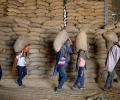
Truck movements across the India-Bangladesh border are on the rise, with increasing rentals signalling a trade recovery between the two South Asian nations. Yet, geopolitical tension looms large, with Bangladesh now under an interim government for nearly two months.
Rating agency Crisil on Friday said growth rates witnessed in the current fiscal in several sectors are expected to continue for 3-5 years, even as it predicted rising wages in the information technology sector by 2007-08.
The rating agency expects that key fiscal indicators of state governments -- revenue deficit and gross fiscal deficit - may deteriorate from 2009 though the impact will begin to be felt in the current fiscal. It further said that the adverse effect of lower revenue growth will be aggravated due to higher development and non-development expenditures.

The Crisil study covered 600 companies excluding financial services and oil companies, representing 71 per cent of the overall market capitalisation of India Inc.
.jpg)
The agency also warned the government of overshooting the fiscal deficit target at 4.8 per cent due to poor revenue growth and pegged it at 5.2 per cent this fiscal.
Credit rating agency Crisil has announced that it has reached a preliminary understanding with Equifax Inc of the US, and Tata Capital Ltd to set up a credit information company, which provides credit histories and checks on retail borrowers.

The liquidity will move into deficit after advance tax payments and GST outflows. It will rebound in October because of government spending.
In a new report, the agency said the gross non-performing assets for the sector will rise to around 4 per cent on an asset size of over Rs 5,50,000 crore by March 2009, as against 2.7 per cent at the end of March 31, 2007. The rise in bad debt will translate into more losses for lenders.
Crisil said the next fiscal could be a year of new leadership and old challenges.

The "weaponisation" of economic activity - through tariffs and sanctions - is now a reality, with countries leveraging these tools strategically, External Affairs Minister S Jaishankar said at the Raisina Dialogue recently.
Credit rating agency Crisil on Wednesday said depreciation in the rupee will shave off up to Rs 4,000 crore (Rs 40 billion) from the profits of Nifty companies in the December quarter.

Mining conglomerate Vedanta Limited has received approvals from the majority of its creditors for a proposed demerger of businesses, marking an important step in the company's plan to split into six independent listed companies. "I am happy to let all of you know that we have received the 52 per cent plus the additional percentage, which is required for us to reach 75 per cent. "We have crossed that threshold as well. Most of the lenders have approved it," a senior Vedanta executive said in a recent bondholder conference call.

India's leading steel companies hope the Modi 3.0 Budget will continue the massive capital expenditure currently underway, focusing on infrastructure development, manufacturing, and fair trade. The infrastructure segment is the largest steel user, and the government's focus has fuelled steel consumption even as international markets have underperformed. According to provisional statistics, steel consumption grew 13.6 per cent in FY24, reaching 136 million tonnes (mt), according to a CRISIL report.

Amid low growth elsewhere, gross value added (GVA) growth in agriculture and allied activities recovered during the second quarter of the current financial year (Q2FY25) to 3.5 per cent year-on-year (Y-o-Y) due to strong monsoon. Experts feel that the rains have laid the foundation of an even better GVA performance in subsequent quarters. GVA growth in the first quarter of FY25 was 2.0 per cent.

Crisil said a complete phase out of CST is necessary.

Following are comments from economists at leading financial institutions, banks and rating agencies on the interim Budget:
